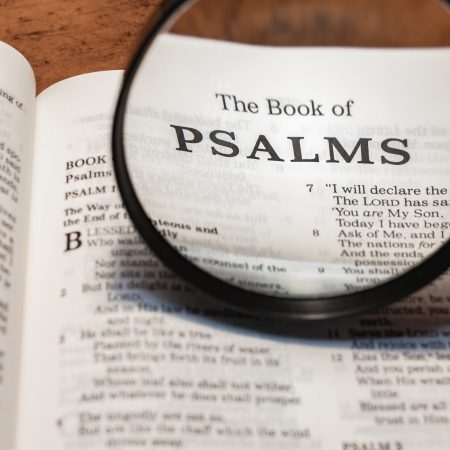
Psalm 97 is part of a group that includes Psalms 93-100. All of these Spirit-inspired poems of praise contain a common theme: the kingly rule of the Almighty God. Our Sovereign God reigns in infinite power and authority over all of Earth and Heaven. In the New Testament, our Lord Jesus describes himself as that Sovereign ruler: “All authority is given unto me in heaven and on earth. Go therefore and make disciples of all the nations” (Matthew 28:18-18).
God’s people rejoiced in the Psalmist’s old covenant day, as we do in the glorious new covenant, that our sovereign King holds and exercises all universal power. Psalm 97 exults in praise for God, instructing us of four great truths: Our God rules and his people are glad; He is the only God; He always judges rightly; and He commands that we despise evil and rejoice in him.
Read the full sermon transcript below!
Psalm 97 is part of a group that includes Psalms 93-100. All these Spirit-inspired poems contain a common theme, which is the universal, kingly rule of the Almighty God. He reigns in infinite power and authority over all of earth and heaven. God’s redeemed people rejoice at such a marvelous, reassuring, encouraging truth. The unredeemed, however, unless they repent and trust in God’s salvation, have in the long term nothing to rejoice about, at least not with any legitimacy.
Psalms 96, 97, and 98 each hail God’s coming as King, in the person of the Messiah, whom we now know as God’s own Son, Jesus Christ. He came to the world as the redeemer and ruler sent from God two thousand years ago, possibly a thousand years from the time of the writing of this morning’s Psalm. Similarly, he will come again at some future day when the fullness of time in God’s plan has come.
We believe there are shades of both advents of our Lord within Psalms 96-98. All three of these wonderful praise songs exult in how glorious the day of the Lord’s coming will be for believing followers of God.
It is important, however, that we not look exclusively to the future of the psalmist or of ourselves. When the author of Psalm 97, inspired by the Holy Spirit, put pen to paper and wrote about God’s majesty in all earth and heaven, God and his ruling power were very present in the world, everywhere, as he is today.
We are indebted this morning to the writings of Derek Kidner and James Boice, with the latter commenting, “Psalms 96, 97, and 98 each hail God’s coming as the world’s King. But Psalms 96 and 98 soar with delight at what is in store for the world when God returns, while in Psalm 97 the frightening, awesome side of God’s kingly rule is emphasized. God’s rule is still something to be joyful about, but we are to be under no illusions as to what is involved. God’s rule will mean the confounding of all evil and the rule of perfect righteousness.”
In this Psalm, we bear in mind both the future, when Christ the King of Glory and All Power shall return to reign over his perfected new heaven and new earth, and the present ruling and governance of God over heaven and the world right now. Simultaneously, we do not forget that the same sovereign and omnipotent God held and exercised all universal kingly power in the Old Covenant era, also, from the very founding of the earth. Let us now proceed to learn about the majesty and power of our God.
Our God Rules and His People Are Glad
First, we can know that our God rules and his people are glad. We believe that the first verse of this inspired poem sets the tone and states the theme of all that follows (v. 1): The Lord reigns; let the earth rejoice; let the multitude of isles be glad!”
The Lord reigns! You can sense the excitement the writer exudes and can almost hear the glad voices of the congregation lifted up in happy praise of their and our sovereign God. Saying that, as our ancient forefathers exulted in the Psalm, God “reigns” is to declare that he is sovereign. It is to acknowledge that he has absolute authority and rule over all the works of his hands, all creation, all that exists. Such absolute power—complete sovereign authority—is an attribute that God alone possesses, and without it God could not be God.
As Boice explains, “Sovereignty involves other attributes too. In order to be sovereign, God must be all-knowing, all-powerful, and absolutely free [to do all his holy will]. If he were limited in any one of these areas, he would not be completely sovereign. If he did not know what was going on, he would be constantly taken by surprise. If he were not omnipotent, he would not be able to control events. If he were not absolutely free, his actions would be predetermined by some other will or by unavoidable circumstances.”
If God were not sovereign, he might love, but his love could be thwarted, insufficient, and unable to reach his creatures. If God were not sovereign, justice and right could be frustrated, and injustice could prevail over the will of God.
In this world, we see much injustice, and we long for the return of our Sovereign ruler Jesus Christ. In the meantime, the fact that God is sovereign is an immense comfort to his people, for he is always working in all the affairs of the world. When Jesus was confronted by the Jewish rulers, who wrongfully condemned his Sabbath activities, he explained, “My Father is always at his work to this very day, and I, too, am working.”
When God’s redeemed sons and daughters consider that our Lord is always at work in every affair of his entire world, that he has been since the very beginning at, and even before, the creation of the world, and that he always will be carrying out his work of ruling over all the affairs of all his creatures forever and ever, we, the people of the living God, have every reason to rejoice!
That sentiment is expressed so wonderfully when the Psalmist considers this and insists (v. 1): Let the earth rejoice; let the multitude of isles be glad!” In other words, “Let the whole world near and far, whether in Jerusalem near at hand, or in one of the most far-flung coastlines of the seas…let everything that has breath praise the Lord!”
This all-encompassing rule of God fosters questions in the human mind, such as “What is God like? What is his power like? Surely we can somehow see his power at work, can’t we?”
Yes, indeed, we can. Sometimes we see God at work in the so-called little things of life. The Lord God described to Elijah the manifestation of his presence and works being sometimes like a still, small voice and a soft, gentle breeze.
At other times and in other ways, God sometimes manifests his presence in the most dramatic and terrifying of ways. That is what verses two through six describe for us. “The point of these verses is that a manifestation of the true God is awe-inspiring to the point of bone-shattering fear and trembling…” The manifestation of God’s presence and power is so beyond normal description that the psalmist used poetically exaggerated word pictures to describe it (vv. 2-6):
2 Clouds and darkness surround Him; righteousness and justice are the foundation of His throne. 3 A fire goes before Him, and burns up His enemies round about. 4 His lightnings light the world; the earth sees and trembles. 5 The mountains melt like wax at the presence of the Lord, at the presence of the Lord of the whole earth. 6 The heavens declare His righteousness, and all the peoples see His glory.
The awesome power and presence of the Lord in human experience should be a warning to all. As the author of the New Testament book of Hebrews writes, “Our God is a consuming fire…See to it that you do not refuse him who speaks” (12:29, 25).
“We must never take God lightly, as if he were nothing more than some great heavenly buddy or pal,” yet many people do think of God in this way. They act as if he were some heavenly Santa Claus, “making a list and checking it twice, and is ‘gonna’ find out whose naughty and nice. So be good for goodness’ sake.”
We see this abominable cavalier attitude toward God in our day-to-day life. Something either extraordinarily good or bad happens, and out comes the blaspheming language from people. “Oh my God!” or “O God, is it really true?” My daughter sometimes gets irritated at my sarcastic remarks when I hear this on TV, and mockingly say things like: “O! Isn’t that great? I’m so excited, I think I’ll blaspheme God!”
That kind of slanderous approach to the personhood and name of the Almighty God “is not a sign of [people’s] close acquaintance with him, as they probably suppose, but of the fact that they hardly know God at all” at least as he really is and manifests himself to be. Those who know God speak of him and approach him joyfully but with careful reverence and the greatest awe, because as we have said, “Our God is an awesome God.” He is not to be considered lightly, and his name is to be hallowed!
Our God Is the Only God
As we move forward into the stanzas of this remarkable Psalm, we find a challenging emphasis that is corollary to the awesome sovereignty of God, and that is his absolute exclusiveness; in other words, our God is the only God.
The previous verses have described in most dramatic terms the awesomeness of God and how astonishing it is when he manifests his awesomeness, as if the mountains melted before his consuming fire and thick smoke, thunder and lightning. If the Lord God of the Bible, whose name is Jehovah, is as the previous verses have described him—and he is!—then he alone possesses such power and attributes.
Moses saw awesome manifestations of God, like the burning bush, the parting of the Red Sea, and the ominous fire, smoke, thunder, and lightning when God came down to Mt. Sinai and gave Moses the Ten Commandments. And Moses remarked (Exodus 15:1): “Who is like you, O Lord, among the gods?
The Lord God declared himself as the only true and living God through his servant the prophet Isaiah, when the Lord God said of himself (Isaiah 45:5, 14): “I am the Lord, and there is no other; there is no God besides me.”
I think we all would agree that those words from God himself are unmistakably clear; he is the only God. But that brings up another question, doesn’t it? If there is no God besides our God—which there isn’t—then why do the very words of this morning’s Psalm speak of other “gods” and command all other “gods” to worship our God? (v.7): Let all be put to shame who serve carved images, who boast of idols, worship him, all you gods.
We could spend a lot of time discussing this question, but we simply do not have a lot of time remaining. We will, then, give brief consideration to the 17th century theologian John Owen, who sets forth three possibilities regarding the use of the word “gods” in this verse. Bear in mind that the Hebrew word for gods used in this Psalm is the word elohim, which literally means “gods.”
Owen believes that the first possibility could be that the use of the word “gods” in Psalm 97 is an appeal to the nations that worship idols with the meaning, “Worship him, all you who serve idols. Turn from these false gods to the true God.” That certainly could be the meaning, but the text appears to be addressed directly to the false gods themselves.
Another possibility in Owen’s masterful opinion is that the appeal could be to the rulers of the people, the mighty ones on the earth, who wield power among men, commanding them to bow down and worship the true God.
Jesus interpreted the word elohim this way when the Jewish rulers accused him of blasphemy. He quoted Psalm 82, which is largely a rebuke of Israel’s leaders for their abuse of power, including v. 6, which reads, “I said, ‘You are gods, and all of you are children of the Most High, but you shall die like men, and fall like one of the princes.'”
Here, too, we are left with the tension between “gods” with a little “g” and the true God, who, in some Scripture portions, is also identified by the name Elohim.
A third possibility, and arguably the most popular, is that the word “gods” refers to angels. The angels do worship God; we know that from Scripture. And the word elohim is translated by some versions of the English Bible as “angels,” such as Psalm 8 (vv. 4, 5): What is man that you are mindful of him, and the son of man that you visit him? For you have made him a little lower than the angels.
The problem here is that Psalm 97 isn’t addressed to angels who commit idolatry by serving carved images. The angels know better, for they are described in the Bible as being around the throne of God, worshiping him. Angels and we know, as Paul said, that idols are nothing but worthless memorials to false gods that do not exist (1 Corinthians 8:4): We know that an idol is nothing in the world, and that there is no other God but one…
Another question in relation to this position is: “If the seventh verse of Psalm 97 means angels, then why does the original Hebrew not use the Hebrew word for angels, which is malak? The word used in Psalm 97 is elohim, which literally means “gods.”
There you have three possibilities of the use of the word “gods” when Psalm 97 commands, “Worship him, all you gods.” My choice is the second option, meaning that the word refers to men whom God has given power to rule in the world. But if your choice is any one of the three, you are in good company. Either way, the point of Psalm 97 in these verses remains the same: There is no God but our God.
Our God Judges Rightly
Let us move forward to the next theme in the inspired verses of our Psalm, where we learn that our God judges rightly (vv. 8-9): 8Zion hears and is glad, and the daughters of Judah rejoice because of Your judgments, O Lord. 9For You, Lord, are most high above all the earth; You are exalted far above all gods.
Here, the theme returns to the one introduced at the very end of the preceding Psalm 96 (96:11-13): 11Let the heavens be glad, and let the earth rejoice; let the sea roar, and all that fills it; 12let the field exult, and everything in it! Then shall all the trees of the forest sing for joy 13before the Lord, for he comes, for he comes to judge the earth. He will judge the world in righteousness, and the peoples in his faithfulness.
Psalm 98, the one that follows our morning sermon text of Psalm 97, ends on much the same note as Psalm 96, namely, great joy and rejoicing because of God and his judgments (98:7-9): 7Let the sea roar, and all that fills it; the world and those who dwell in it! 8Let the rivers clap their hands; let the hills sing for joy together 9before the Lord, for he comes to judge the earth. He will judge the world with righteousness, and the peoples with equity.
Zion hears and is glad, and the daughters of Judah rejoice because of the righteous judgments of the Lord, exults the Psalmist. The glad singers of these lines were Old Testament believers, who looked forward both to the first coming of the Messiah and the second. Believers in our New Covenant day rejoice that the Messiah has come and look forward in eager anticipation to his second coming.
Certain things do not change in the movement of history from the days of the old era to the present time of the new. One of the constants for Christians is that we have no reason to fear God’s presence now and his future coming as Judge of the world and its inhabitants.
This is because if we look in faith to the cross where God’s Son bled and died to pay for our sins, there is even now no condemnation against us, the Bible says. Furthermore, on the Day of Judgement, that great final day when the Judge of all people returns, we who believe in him now shall then be openly acknowledged as belonging to God through Jesus, and we shall be acquitted of our sins finally and forever. Then we shall enter our grand forever home of the new heaven and new earth. The judgments of God should not be a terror to us who trust and follow Jesus, because for us it is the beginning of everlasting joy.
Our God Expects Us to Hate Evil and to Rejoice in Him
That day will be unimaginably horrible for the impenitent wicked, but the final stanzas of Psalm 97 are an encouragement to those living in the world today. Yes, there are many hard and trying times in the world, but Scripture reassures and exhorts us in these words (Hebrews 10:23): Let us hold fast the confession of our hope without wavering, for He who promised is faithful.
Those words from the New Testament book of Hebrews give wise advice on how to live in this world as we await our passing from this life and arrival in glory. Psalm 97 exhorts us similarly by telling us to do two things: hate evil and rejoice in the Lord (vv. 10-12): 10You who love the Lord, hate evil! He preserves the souls of His saints; He delivers them out of the hand of the wicked. 11Light is sown for the righteous, and gladness for the upright in heart. 12Rejoice in the Lord, you righteous, and give thanks at the remembrance of His holy name.
[Boice] First for consideration is hating sin (v. 10): You who love the Lord, hate evil! If we love the Lord, we will hate evil. As our love for the Lord grows and increases, which it should in time, our tolerance for and attraction to things that are evil should correspondingly decrease. As we carry on in the Christian life, we advance in sanctification of mind and body, we persevere in devotion to the Lord, and we learn by faith to submit to his rule over our lives.
These positive spiritual qualities and others are ways we love God, and love for God fosters the hatred of evil and wickedness. The more we grow in our love for God and come to appreciate his splendid beauty in all its ways, the less attractive and the more hideous sin and wickedness appear to us.
All the while, as we make our way through this blessed walk with Christ, there are many good things we enjoy from our God that are immeasurably beneficial. There are many blessings from God’s hand every day for his beloved redeemed. The psalmist notes four of them.
First, we can expect protection (v. 10): He preserves the souls of his saints. No matter how hard, threatening, dangerous, or painful the trials of life become for us, even when our mortal bodies finally succumb to one of them in death, he preserves the soul of his saints.
Next, we can expect deliverance by the hand of the Lord (v. 10): He delivers them out of the hand of the wicked. If we took the time this morning to think back over our lives, we could probably recall many incidents in life that were a real and true dangerous threat. When we passed through the hardship safe and well, even if battered and wounded in body and in soul, we probably looked around and thanked the Lord for delivering us.
Third, he gives us light (v. 11): Light is sown for the righteous. Light being “sown” is an expressively poetic choice of words. Derek Kidner explains that the idea behind the translation from Hebrew to English is very simple. The original language says, “Light dawns for the righteous.” When the sun pops over the mountain top and floods the valleys with light, it is as if the hand of God has sown light into and across his wide world.
The same is true of spiritual light. The believer never walks in darkness. Even if we were in the darkest recesses of the ground, in a cave where no physical light penetrates, the spiritual light of God would still illuminate our hearts, for he is always with us. His light shows us the good and safe path, as the Psalm says, “Thy word is a lamp unto my feet, and a light unto my path.”
Fourth and final, the three blessings of God’s promise to his people produce in turn something wonderful: gladness (v. 11): And gladness for the upright in heart. When you consider all these wonderful gifts from our God—protection, deliverance, heavenly light—doesn’t it make you glad? Surely it does!
So, as being the blessed recipients of the gifts of God’s mercy and the benefits of his promises makes us glad, isn’t there something we should do in return? Yes, there is, the second commandment of these closing verses (v. 12): Rejoice in the Lord, you righteous, and give thanks at the remembrance of his holy name.
The Psalm ends like it began. It began in v. 1 by calling upon the people of the whole earth to rejoice in God’s rule (v.1): The Lord reigns; let the earth rejoice; let the multitude of the isles be glad!
We are the beloved redeemed of God, bought with the blood of the Lamb, his only begotten Son, filled with his beautiful, renewing Spirit, so this exhortation should seem very personal to us all. The Psalm ends by calling on us to worship the Lord with joy and thankful hearts. If we, God’s very own sheep, do not praise God joyfully, who will? If we do not praise him now, when will we?
Brethren, what then are we to do? I suggest, let’s all praise the Lord. In just a moment, you will have an opportunity to praise him in song. Do it with gusto! We have a lot to sing about, and quite joyfully, because we are the people of the living God, who reigns over all the earth and even in our own hearts.